

Is Alexandria Egypt Worth Visiting? The Ultimate Guide to the Mediterranean Pearl
Why Alexandria Deserves a Spot on Your Itinerary
The salt air of the Corniche, the clink of espresso cups in a century-old café, and ruins that still whisper of emperors—yes: Alexandria, Egypt is worth visiting. Within a single weekend, you can walk from the modern Bibliotheca Alexandrina to Roman-era catacombs, eat seafood pulled straight from the Mediterranean, and experience a very different side of this country. As travel experts, we have extensively tested train and car routes from Cairo to provide practical, locally-verified advice that helps you plan a confident visit. This guide shows you what to see (library, catacombs, Qaitbay), when to go, how to move around, and exactly why this coastal city deserves at least 48 hours on your Egypt itinerary.
A City Steeped in History: From Alexander the Great to Modern Times
Founded in 331 BC by Alexander the Great, Alexandria became the intellectual heartbeat of the ancient Mediterranean and a crossroads where Greek, Egyptian, and Roman cultures mixed freely.
The Legacy of Knowledge
- The Ancient Library of Alexandria once housed scholars, scrolls, and debates that shaped the ancient world; while the original collection is gone, its reputation as a global center of learning endures.
- Today, the modern Bibliotheca Alexandrina (opened in 2002) channels that spirit with a striking coastal building, reading rooms, and rotating archaeological and manuscript exhibits — plan 1.5–2 hours for a focused visit.
Must-See Historical Landmarks
- Catacombs of Kom El Shoqafa – These subterranean tombs (plan 45–60 minutes) blend pharaonic motifs with Hellenistic and Roman carving styles; expect cool stone walls, dim shafts, and striking funerary sculptures that reveal how multicultural the city became after Alexander.
- Pompey’s Pillar – A towering Roman-era column standing in the Serapeum area; while it’s not the original Lighthouse, the pillar offers one of the most atmospheric plazas in the city and a strong visual link to Alexandria’s Roman chapter.
Wandering these sites, you’ll feel how Alexandria’s history accumulates in layers: a Hellenistic grid beneath Ottoman cafés, marble fragments embedded near modern piers, and a living urban fabric that keeps the past in touch with daily life.
Practical note: If you care about authoritative sources, cite the Bibliotheca Alexandrina website for opening hours and the Ministry of Antiquities for current access rules to Kom El Shoqafa and the Serapeum area. Museum or site opening times can change seasonally, so check before you go.Lorem ipsum dolor sit amet, consectetur adipiscing elit. Ut elit tellus, luctus nec ullamcorper mattis, pulvinar dapibus

Mediterranean Magic: The Corniche & Coastal Life
One of Alexandria’s greatest gifts is its location on the Mediterranean — a coastline that shapes the city’s rhythm, food, and mood in ways Cairo never does.
The Corniche Experience
Strolling along the Corniche feels like a local ritual: gulls calling over the water, the tang of salt and grilled fish, and groups of friends pausing at the rail to watch fishing boats drift by. Plan a late-afternoon walk from the Mansheya district toward the eastern harbor — it’s roughly a 45–60 minute route at a relaxed pace and delivers continuous views of the sea, small harbors, and seaside cafés.
- Waves crashing against the rocks — best experienced at low tide near the Stanley area
- Fishing boats at sunset — an ideal photo moment around the eastern harbor
- Locals sipping coffee by the sea — try an espresso at a café with terrace seating for people-watching
Alexandria’s Beaches
- Stanley Beach – Famous for its Stanley Bridge viewpoint and evening promenades; good for photos and lively after sunset.
- Mamoura Beach – A more relaxed, family-friendly stretch with cleaner sand and calmer water; visit in the morning for quieter swimming.
Compared with Cairo’s inland heat and crowded streets, Alexandria feels cooler thanks to the Mediterranean breeze — spring and fall are especially pleasant for long walks along the coast. For the best light and fewer people, head out at sunrise or an hour before sunset.
Safety & photo tip: the Corniche is busy after dark in central areas, but stick to lit, populated stretches (Mansheya to Stanley) and keep valuables secure while photographing the harbor.
Architecture Where East Meets West
A Unique Urban Identity
- Delicate Italian balconies with peeling paint and jasmine vines
- Elegant French-style façades along quieter side streets near the central district
- Islamic and Ottoman details — carved stonework, arched windows, and narrow alleys in neighborhoods like Al-Attarin
Architectural Highlights
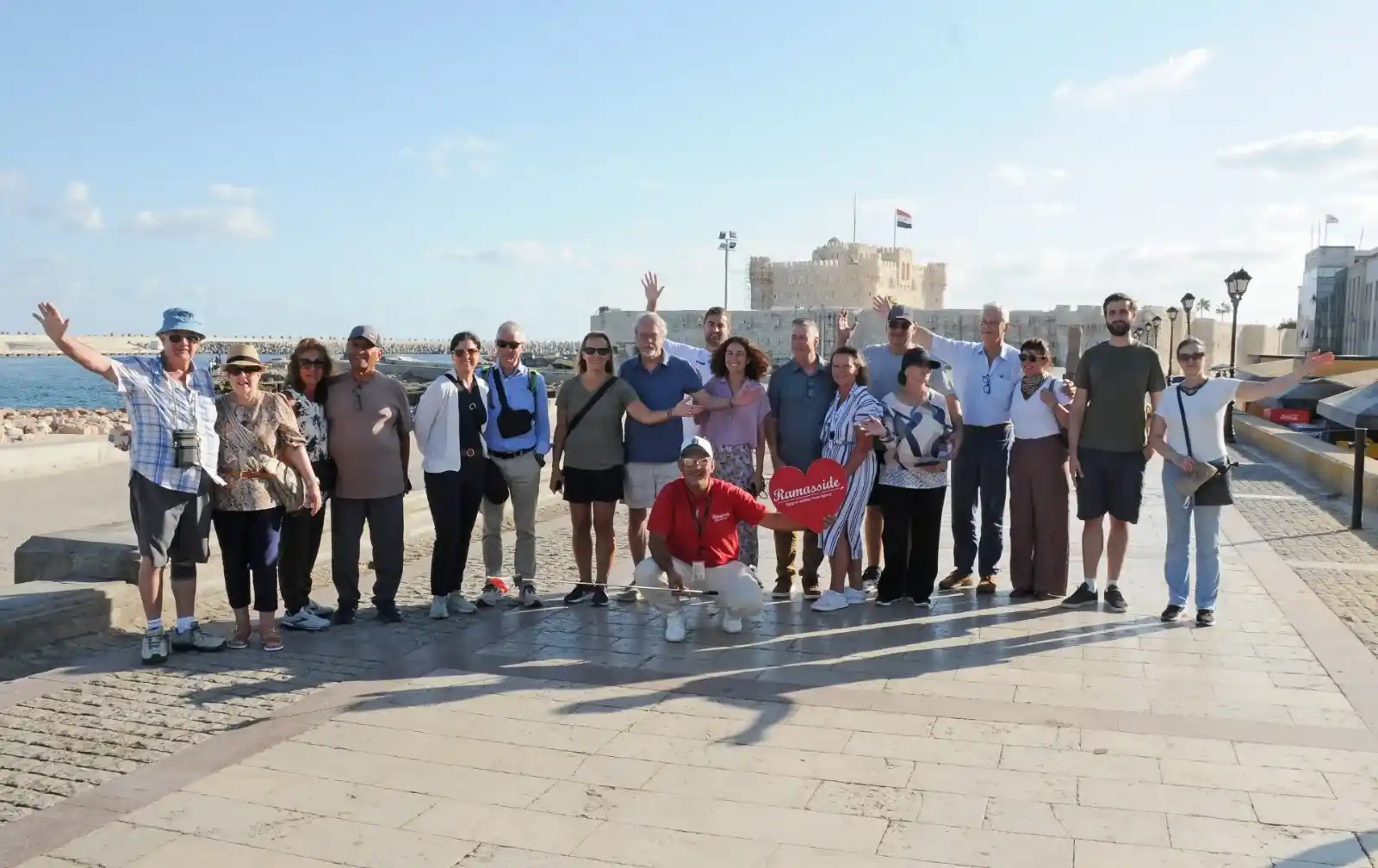
- Qaitbay Citadel – Built in the 15th century by Sultan Qaitbay, this sea-facing fortress occupies the site associated with the ancient Lighthouse of Alexandria. For dramatic photos, visit at golden hour when the stone glows and fishermen anchor nearby; the fort’s battlements give sweeping views of the harbor and the Mediterranean.
- Montaza Palace – Set within royal gardens, Montaza combines late 19th–early 20th-century palace architecture with seaside promenades. Stroll the manicured lawns, peek at the seaside pavilions, and pause at a cafe overlooking the sea — mornings and late afternoons are the most pleasant times to explore.
Alexandria’s Food Scene: A Culinary Journey
Seafood Capital of Egypt
- Grilled sea bass — often finished with lemon and a sprinkle of local dukkah, charcoal-charred skin and flaky flesh.
- Shrimp tajine — slow-cooked with tomatoes, garlic, and spices; best ordered with warm baladi bread to soak up the sauce
- Calamari — tender, sometimes fried, sometimes grilled, and commonly served with tahini or lemon
Local Favorites
- Alexandrian liver sandwiches (kebda eskandarany) — spiced, sautéed liver piled into a warm roll; a must-try street-food staple
- Koshary with a coastal twist — the classic Egyptian carb-and-lentil dish sometimes topped with seafood-inflected sauces in coastal cafés
- Traditional desserts and pastries — light syruped sweets and crisp baklava, often enjoyed after a seaside meal with strong Egyptian coffee.
Historic Cafés
How to Visit Alexandria Can You Do a Day Trip from Cairo?
Yes — and it’s a very popular option for travelers short on time. Expect about 2.5–3 hours each way by car or by intercity train. Travelers interested in premium rail options can read more about whether it’s worth going to Alexandria from Cairo using Egypt’s newer high-speed Talgo services.
Sample 1-Day Itinerary (Realistic Timing)
- 07:00 — Depart Cairo (early train from Ramses Station or private car)
- 10:00 — Arrive in Alexandria; coffee on the Corniche
- 10:30–12:00 — Bibliotheca Alexandrina (quick highlights)
- 12:30–13:30 — Lunch: seafood near the eastern harbor
- 14:30–16:00 — Catacombs of Kom El Shoqafa and Pompey’s Pillar area
- 17:00 — Walk the Corniche toward Qaitbay for sunset photos
- 19:00–20:00 — Train or drive back to Cairo
Best Time to Visit
- Spring & Fall: Ideal weather for walking the coast and visiting sites — comfortable temperatures and clear light for photos.
- Winter: Cooler, with dramatic skies and rougher seas — atmospheric for photographers and museum-goers.
- Summer: Busy, sunnier days; seaside dining and evening promenades are lively, but daytime heat can be strong.
Getting There & Practical Transport Tips
- Train: Board at Cairo’s Ramses (Misr) Station. First- and second-class seats vary in comfort; book ahead for weekends. Trains are usually the most comfortable and predictable option.
- Bus: Several private operators run Cairo–Alexandria routes. Buses are affordable but allow extra time for traffic.
- Private car or ride-hailing (Uber/Careem): Flexible for door-to-door travel — budget for tolls and fuel; driving time depends heavily on Cairo traffic.
Money, Safety & Practicalities
- Currency & ATMs: Egyptian pounds are standard; ATMs are common in central Alexandria, but carry some cash for markets and small vendors.
- Luggage: For a day trip, travel light—carry a daypack and leave large bags in Cairo or book a hotel with luggage storage if staying overnight.
- Security: Central and coastal areas are generally tourist-friendly. Use licensed taxis or Uber at night, avoid poorly lit side streets, and keep valuables discreet.
- Opening times & prayer times: Museums and sites sometimes close briefly for Friday prayers or have seasonal hours — check official sites (Bibliotheca Alexandrina, Ministry of Antiquities) on the morning you travel.
- Connectivity: Local SIMs are inexpensive; Wi‑Fi is available in many hotels and cafés, but not always reliably at outdoor sites.
Quick Travel Tips
- Buy train tickets in advance for weekends and holidays.
- Start early to beat both traffic and crowds; the Corniche is best at sunrise or late afternoon for photos.
- If you love seafood, schedule lunch near the harbor to get the freshest catch; reserve a table for sunset dining on weekends.
- Plan at least 48 hours to experience the city properly — a day trip is possible, but two days lets you enjoy museums, Qaitbay, and a relaxed food crawl.
Alexandria vs. Cairo: Do You Need Both?
Cairo and Alexandria answer very different travel impulses. Cairo delivers monumental archaeology, bustling markets, and a high-energy urban sprawl centered on the Nile and the Pyramids; Alexandria delivers sea air, a calmer pace, and a cultural mix shaped by centuries on the Mediterranean coast.
Concrete differences to help you decide:
- Attractions: Cairo’s draw is large-scale history and museums (pyramids, Egyptian Museum). Alexandria focuses on coastal sites and museums with a Greco‑Roman flavor (Bibliotheca Alexandrina, Kom El Shoqafa, Qaitbay).
- Pace & atmosphere: Expect dense traffic and continuous activity in Cairo; Alexandria moves more slowly—people stroll the Corniche, cafés spill onto sidewalks, and evenings center on seafood and sunsets.
- Practicalities: Cairo usually requires more time to navigate and longer museum visits; Alexandria is compact enough that 48 hours lets you see major sites comfortably.
Recommended allocation: if you have one week, split it roughly — 3–4 days in Cairo to cover the Egyptian Museum, Giza plateau, and neighborhoods; 2–3 days in Alexandria to enjoy the coast, the library, and the citadel. If you must choose one, pick based on mood: choose Cairo for ancient wonders and energetic city life; choose Alexandria for coastal views, seafood, and a gentler cultural experience.
Is Alexandria Egypt Worth Visiting?
Alexandria delivers a rare combination: living layers of history, genuine Mediterranean charm, seafood-driven cuisine, and a relaxed coastal pace that contrasts with Egypt’s inland capitals.
- Deep history — from Hellenistic learning to Roman ruins and modern museums
- Mediterranean charm — sea breezes, Corniche promenades, and harbor vistas
- Incredible food — fresh fish, kebda eskandarany, and lively seafood cafes
- Relaxed atmosphere — strollable neighborhoods, historic cafés, and sunset rituals along the coast
Final verdict: Yes — Alexandria, Egypt is absolutely worth visiting. If you can only spare 48 hours, prioritize the Bibliotheca Alexandrina, the Catacombs of Kom El Shoqafa, a Corniche walk to Qaitbay at sunset, and a seafood lunch by the eastern harbor.
Practical next step: book a train from Cairo’s Ramses Station or reserve a simple overnight stay (2 nights recommended) to enjoy the city after museums close. Recommendations here are based on multiple local visits and current site information; check the Bibliotheca Alexandrina and the Ministry of Antiquities websites for up-to-date opening times before you go.
FAQ
How many days do I need in Alexandria?
2–3 days is ideal. Forty-eight hours covers the highlights—Bibliotheca Alexandrina, Catacombs of Kom El Shoqafa, Qaitbay Citadel, and a Corniche food crawl—while a third day lets you add Montaza Palace, the Alexandria National Museum, and a more relaxed seafood dinner.
Is Alexandria safe for tourists?
Generally, yes—central and coastal areas are frequented by tourists and well patrolled. Practical safety tips: use licensed taxis or ride‑hail apps at night, keep valuables out of sight, avoid poorly lit side streets after dark, and carry photocopies of your passport. For the latest advisories, check your government travel site before departure.
Can I do a day trip from Cairo to Alexandria?
Absolutely — many tourists take a day trip. Trains from Cairo (Ramses Station) and private cars typically take about 2.5–3 hours each way. Sample timing: leave early (7:00), arrive ~10:00, hit the Bibliotheca and catacombs in the morning, lunch on the Corniche, Qaitbay and sunset, and return in the evening. Note: you’ll move fast; if possible, stay overnight to enjoy the coast after museums close.